

Xendit is a rapidly growing fintech company that provides digital payment infrastructure across Southeast Asia, enabling businesses to process online transactions efficiently and securely. It plays a key role in simplifying complex financial operations by offering APIs and tools that help startups, enterprises, and digital platforms manage payments, billing, and financial workflows in a more scalable way. Over time, Xendit has evolved beyond just a payment processor and positioned itself as a technology-driven ecosystem that supports digital transformation in business operations. In the broader fintech landscape, its role is significant because it bridges traditional financial systems with modern digital solutions, making online commerce smoother and more accessible for businesses of all sizes.
Concept of Gamification in Modern Workplaces
Gamification in modern workplaces refers to the use of game-like elements such as points, levels, badges, rewards, and leaderboards to improve employee engagement and productivity. Instead of relying only on traditional management systems, companies integrate these interactive features into daily work processes to make tasks more engaging and goal-oriented. This approach is based on human psychology, where achievement, recognition, and competition naturally increase motivation. In a workplace setting, gamification helps transform routine or repetitive tasks into structured challenges, allowing employees to clearly see their progress and feel a sense of accomplishment. As a result, organizations can create a more dynamic work environment where productivity and satisfaction improve together.
Inside the Xendit Work Gamification Summit
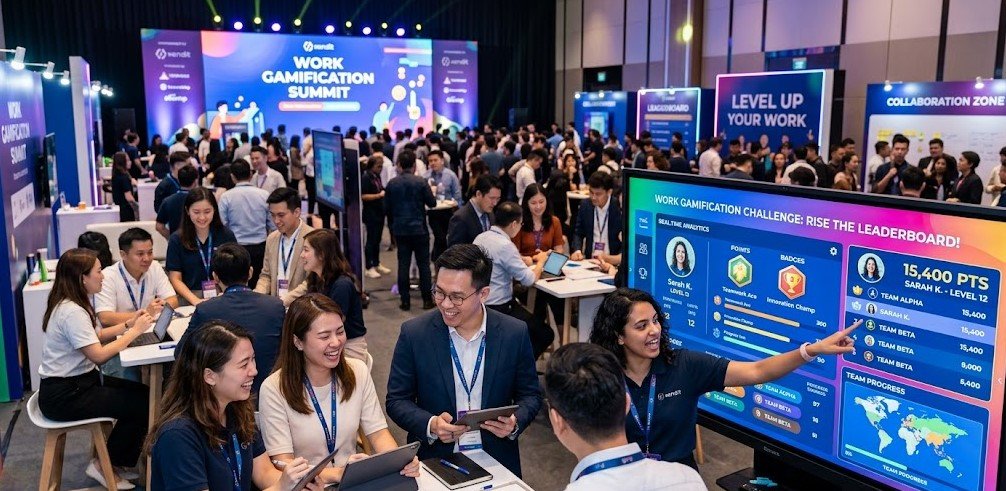
The Xendit Work Gamification Summit focuses on how gamification strategies can be applied to real business environments to improve employee performance and workplace efficiency. It explores practical models where digital systems are used to track progress, assign rewards, and create structured engagement within teams. The summit highlights how companies can move beyond traditional performance reviews and instead use continuous feedback systems powered by gamified elements. This includes showcasing methods where employees earn recognition through task completion, milestone achievements, and collaborative goals. Overall, the summit presents gamification not just as a theoretical concept, but as a practical tool for reshaping how modern organizations operate and motivate their workforce.
Key Strategies Used in Gamified Work Systems
Gamified work systems rely on structured strategies that turn everyday tasks into measurable and engaging experiences for employees. One of the most common strategies is the use of progress tracking dashboards, which visually display achievements and help employees understand their performance in real time. This creates clarity and encourages consistent improvement because individuals can see exactly how their efforts contribute to larger goals. Another important strategy is reward-based motivation, where employees earn points, badges, or other incentives for completing tasks, which strengthens engagement and builds a sense of accomplishment.
Another widely used approach is the introduction of leaderboards and performance comparisons, which add a layer of healthy competition within teams. When designed carefully, this encourages productivity without creating unnecessary pressure or stress. Many organizations also apply task segmentation, breaking larger goals into smaller, achievable steps that feel more manageable and less overwhelming. Together, these strategies form the foundation of gamified systems that aim to improve focus, motivation, and overall workplace efficiency.
Benefits of Gamification for Employees and Businesses
Gamification delivers strong advantages for both employees and organizations by improving motivation, engagement, and overall productivity. For employees, it makes work more interactive and rewarding by adding clear goals, instant feedback, and recognition for achievements. This reduces boredom in repetitive tasks and helps individuals stay more focused because they can track their progress in a structured and visual way. As a result, employees often feel more valued and connected to their work, which improves job satisfaction and reduces burnout.
For businesses, gamification creates measurable improvements in performance and efficiency. Companies benefit from better task completion rates, stronger collaboration among teams, and more accurate performance tracking through data-driven systems. It also helps managers identify top performers and areas that need improvement without relying only on traditional evaluations. In addition, gamification encourages a positive workplace culture where employees are more engaged, which ultimately supports long-term business growth and stability.
Real-World Case Insights and Industry Impact
In real-world applications, gamification has already shown strong results across multiple industries, especially in tech-driven and fintech environments. Companies that integrate gamified systems into their workflows often report higher employee participation, faster task completion, and improved collaboration between teams. These systems work effectively because they combine performance tracking with motivation techniques, making employees more aware of their progress while also encouraging continuous improvement.
In the fintech sector, gamification is particularly impactful because digital platforms like payment systems and financial tools already rely heavily on data and automation. This makes it easier to integrate reward-based systems, performance dashboards, and engagement metrics directly into daily operations. As a result, organizations can create a more responsive and adaptive workplace where employee behavior aligns closely with business goals. Industry experts also note that gamification is gradually moving from an experimental concept to a standard practice in modern digital organizations.
Future of Gamification in Work Culture
The future of gamification in work culture is expected to grow significantly as organizations continue adopting digital transformation strategies. With the rise of artificial intelligence, automation, and advanced analytics, gamified systems will become more personalized and adaptive to individual employee behavior. This means future workplaces will likely offer real-time feedback, customized rewards, and dynamic goal-setting systems that adjust based on performance and engagement levels.
At the same time, companies will focus more on balancing motivation with well-being to ensure gamification remains positive and not overly competitive. As hybrid and remote work models expand globally, gamification will play an even bigger role in maintaining employee connection and productivity across distributed teams. Overall, it is becoming clear that gamification will not just be a trend but a long-term strategy shaping how modern organizations design their work culture and employee experience.
Conclusion
The concept of xendit work gamificationsummit reflects a broader shift in how modern organizations are rethinking workplace productivity and employee engagement through gamification. Instead of relying on traditional management methods, companies are now exploring interactive systems that combine motivation, performance tracking, and reward-based structures. Xendit’s approach highlights how fintech companies are not only transforming financial systems but also influencing workplace culture by introducing more dynamic and data-driven ways of working. As businesses continue to evolve in a digital-first environment, gamification is becoming a practical strategy to improve efficiency, encourage participation, and create more meaningful work experiences for employees.
FAQs
1. What is the main idea of xendit work gamificationsummit?
It focuses on using gamification techniques to improve workplace productivity, engagement, and employee motivation.
2. How does gamification help employees?
It makes work more engaging by adding rewards, progress tracking, and clear goals that improve motivation and satisfaction.
3. Why is Xendit associated with gamification?
Because it explores modern digital systems and workplace innovations that align with fintech-driven productivity models.
4. Is gamification effective in all industries?
It works best in digital, tech, and structured environments, but it can be adapted to many industries when designed properly.
Visit for more information:- existingformore