

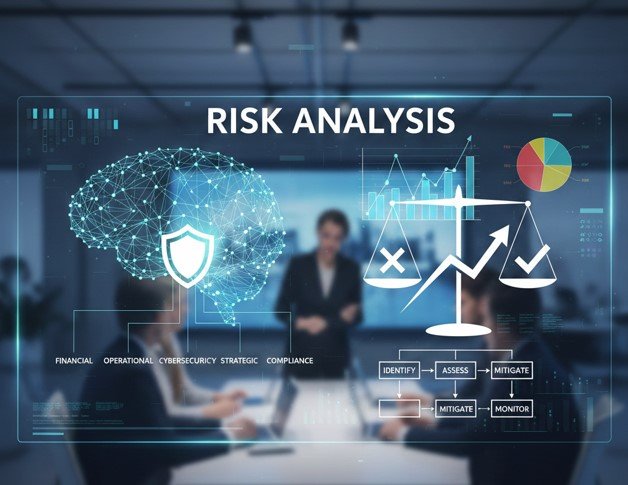
Understanding Business Risk is essential for every entrepreneur, whether they manage a startup, a family-owned shop, or a growing company. Risk is unavoidable, but with smart analysis and proper planning, it can be controlled and transformed into opportunity. A well-designed approach to identifying and managing vulnerabilities helps organizations stay resilient and competitive.
Background & Foundation of Risk in Small Businesses
Every small business operates in an environment full of uncertainty. Business Risk often begins with factors such as limited budgets, small teams, market competition, and dependence on local customers. These vulnerabilities create an environment where even minor disruptions—supply shortages, sudden cost increases, customer loss, or regulatory changes—can have major consequences. This foundational layer of risk is natural and expected, but understanding it helps owners approach challenges with clarity instead of fear. The key lies in recognizing that risk isn’t just a threat; it is also an opportunity for improvement and transformation.
Understanding the Age of the Business (Business Life Cycle Stage)
Risk levels shift depending on how old or established a business is. Startups face high-intensity risk due to unstable revenue, new customer acquisition, and experimental products or services. Mid-stage businesses manage growth risks—staffing, operational expansion, and increased customer expectations. Mature businesses, while stable, face risks related to innovation, modernization, and competition. By understanding the life cycle stage, owners can perform more accurate Business Risk assessments and create targeted plans that match their current phase of development.
Business Structure & “Physical Setup” (Physical and Operational Factors)
The physical and operational layout of a small business greatly influences its risk exposure. Location affects customer traffic, safety, and environmental vulnerabilities like floods or storms. Physical assets—equipment, inventory, technology—also bring their own risks, especially if maintenance is inconsistent. Operational setups such as supply chains, workflow systems, and staff management significantly impact how well a business can respond during disruptions. A thoughtful analysis of a company’s physical environment helps owners build stronger Business Risk strategies that minimize vulnerabilities.
Types of Risks Small Businesses Commonly Face
Small businesses deal with several major categories of risk:
- Financial Risk: Cash-flow instability, unexpected expenses, slow sales, and debt.
- Operational Risk: Equipment failure, employee errors, supply chain issues.
- Strategic Risk: Poor planning, weak competitive positioning, market changes.
- Compliance Risk: Legal obligations, tax issues, licensing requirements.
- Reputational Risk: Negative customer feedback, low trust, poor communication.
Each category influences overall performance, and understanding these types helps businesses design stronger systems to address them. A full Business Risk framework must include every category to ensure proper protection.
Also Road This:- The Benefits of Hiring a Local Removalist Over a Long-Distance Company
Internal vs. External Risk Relationships
Risks exist both inside and outside the business, and the relationship between them is often interconnected. Internal risks come from within the company—employee performance, technology systems, and internal processes. External risks come from outside forces—market changes, consumer behavior, economic challenges, or natural disasters. Together, these factors shape the landscape of Business Risk, and ignoring one side often leaves the business exposed. A balanced perspective allows owners to understand how internal weaknesses may amplify external threats, creating a more accurate risk profile.
Risk Identification Process
Effective Business Risk management begins with identifying potential threats early. Businesses often use brainstorming sessions, financial reviews, operational audits, customer feedback, and market research to uncover risks. Observation is key: noticing repeating issues, bottlenecks, customer complaints, or sudden changes in performance can highlight hidden vulnerabilities. The identification stage is not about solving the problem immediately but understanding where risks originate. Once the business has a clear picture, it can begin developing appropriate strategies.
Risk Analysis & Evaluation
After identifying the risks, the next step is evaluating their severity and likelihood. This analysis helps determine which risks need immediate attention and which can be monitored over time. Businesses usually examine how much damage a risk could cause, how likely it is to occur, and how prepared the company is to handle it. Analytical tools like risk matrices, financial forecasts, and scenario planning add accuracy to this process. Clear evaluation of Business Risk allows owners to prioritize actions and allocate resources wisely.
Risk Prevention & Mitigation Strategies
Prevention is the strongest form of protection. Small businesses can reduce risks through policies, training, technology updates, quality control, and regular maintenance. Mitigation strategies include diversifying suppliers, improving customer service, strengthening cybersecurity, and setting up emergency funds. These approaches reduce the chances of disruptions and minimize damage when challenges occur. Successful Business Risk mitigation transforms uncertain environments into manageable and predictable systems.
Also Read This:- DL10Compare: Revolutionizing Decision-Making with Advanced AI Technology
Risk Transfer Options
Some risks cannot be fully avoided, so businesses rely on transfer methods. This includes insurance, outsourcing certain operations, or forming strategic partnerships. Insurance protects against property damage, liability issues, or unexpected losses. Outsourcing can reduce operational risks by allowing specialists to handle complex tasks. Depending on the business model, risk transfer reduces pressure on small teams and provides an additional security layer. These strategies are essential for broad Business Risk management.
Crisis Management & Emergency Planning
No matter how careful a business is, unexpected crises still occur. Whether it’s a sudden supply shortage, a financial downturn, a natural disaster, or unexpected leadership changes, a crisis plan ensures the business responds effectively. Crisis management includes communication plans, backup vendors, data protection systems, and recovery procedures. Emergency preparedness strengthens the company’s ability to stay calm and organized during difficult situations. A strong crisis plan is a critical part of modern Business Risk management.
Monitoring, Reviewing & Updating Risk Plans
Risk management is never a one-time task. Small businesses must review and update their strategies regularly to stay ahead of new challenges. Monitoring trends, performance data, customer behavior, and market conditions helps businesses stay informed and proactive. By revisiting risk plans, business owners ensure the strategies stay relevant and effective. Continuous improvement is essential for long-term business health and strong Business Risk control.
Future Trends in Small Business Risk Management
Technology is transforming the way businesses approach risk. Artificial intelligence, data analytics, cloud computing, and digital management platforms make risk detection faster and more accurate. New threats such as cybersecurity challenges and digital fraud require updated risk strategies. Meanwhile, global changes such as economic shifts, supply chain evolution, and environmental concerns introduce new layers of uncertainty. Staying informed about these trends helps small businesses adjust their Business Risk approach for the future.
Conclusion
Small businesses encounter many risks, but with the right strategy, those risks become manageable and predictable. Understanding how risks form, how to analyze them, and how to respond effectively ensures long-term stability and growth. When business owners take proactive steps toward strong Business Risk management, they protect revenue, strengthen operations, and build a resilient foundation that supports future success.
FAQs About Business Risk Analysis
What is business risk analysis?
Business risk analysis is the process of identifying, evaluating, and prioritizing potential threats that could affect a company’s operations, finances, or overall stability.
Why is business risk analysis important?
It helps businesses prevent losses, improve decision-making, protect assets, and ensure long-term sustainability by preparing for potential challenges.
How do small businesses benefit from risk analysis?
Small businesses gain clarity, reduce uncertainties, improve planning, and strengthen their ability to respond to unexpected events.
What types of risks are usually analyzed?
Common risks include financial, operational, compliance, strategic, and reputational risks that may affect business performance.
How often should a business perform risk analysis?
Risk analysis should be done regularly—ideally quarterly—and anytime major changes occur, such as expansion or market shifts.
What tools are used in business risk analysis?
Businesses use risk matrices, audits, financial forecasts, data analytics, and scenario planning to measure and evaluate threats.
Who is responsible for conducting risk analysis?
Owners, managers, risk specialists, or external consultants typically handle the process, depending on the size of the business.
Can risk analysis prevent financial losses?
Yes, by identifying vulnerabilities early, businesses can take action to avoid or minimize losses before they escalate.
Is technology useful for risk analysis?
Absolutely. Tools such as AI, analytics software, cloud systems, and monitoring platforms help businesses detect risks faster.
What happens after risks are identified?
Businesses evaluate the severity of each risk, create mitigation plans, and monitor them to ensure long-term protection.
Visit for more information:- existingformore