

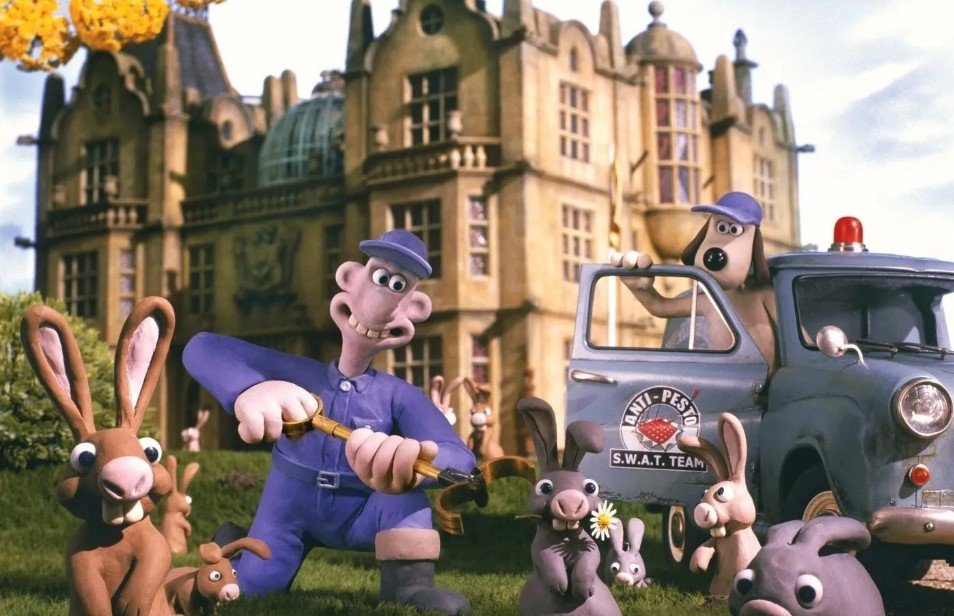
In the rich world of stop-motion animation, few characters are as instantly recognizable and beloved as the eccentric inventor Wallace and his loyal dog Gromit. With their quirky British charm, whimsical adventures, and clay-crafted aesthetics, they have captured the hearts of audiences worldwide. Among their cinematic achievements, Wallace and Gromit: The Curse of the Were-Rabbit stands out as a defining feature film that combines humor, heart, and horror parody in a way only Nick Park and Aardman Animations could achieve.
Released in 2005, Wallace and Gromit: The Curse of the Were-Rabbit movie marked the duo’s first full-length film and quickly established itself as a critical and commercial success. The film received widespread acclaim for its wit, craftsmanship, and originality, culminating in an Academy Award for Best Animated Feature. It remains a landmark not only in stop-motion animation but also in family-friendly cinema that respects the intelligence and humor of its viewers, regardless of age.
A Unique Plot with a Monstrous Twist
At the heart of Wallace and Gromit: The Curse of the Were-Rabbit is a delightfully absurd mystery that blends the supernatural with small-town gardening. The story takes place in a quaint English village obsessed with its annual Giant Vegetable Competition—a celebration of gardening prowess and homegrown pride. However, this peaceful celebration is under threat from a mysterious creature known only as the “Were-Rabbit,” a massive beast with a seemingly insatiable appetite for vegetables.
Enter Wallace and Gromit, the oddball duo behind “Anti-Pesto,” a humane pest control business that prides itself on rescuing rather than harming garden critters. Wallace, ever the inventor, has developed gadgets like the “Bun-Vac” and other ingenious devices to keep the town’s rabbits in check. Their home doubles as a sanctuary for these garden raiders, who are safely stashed away rather than exterminated.
But things go awry when one of Wallace’s new experiments—an attempt to brainwash the rabbits into hating vegetables—backfires. Soon after, the monstrous Were-Rabbit begins wreaking havoc, and the pair must unravel the mystery before the village’s prized produce is destroyed and their own secret is revealed.
Character Dynamics and Brilliant British Humor
Much of the charm of Wallace and Gromit: The Curse of the Were-Rabbit lies in the chemistry between its lead characters. Wallace is voiced by Peter Sallis with impeccable comedic timing, portraying the lovable, cheese-obsessed inventor who is both clueless and endearing. Gromit, as always, is silent but expressive, communicating entire story arcs with a single eyebrow raise or weary glance. In a world where dialogue often dominates storytelling, Gromit’s silent presence speaks volumes and remains one of the franchise’s most brilliant narrative choices.
Supporting characters add layers of hilarity and plot development. Lady Tottington, voiced by Helena Bonham Carter, serves as both a love interest and a symbol of the village’s refined sensibilities. Her rivalry with the pompous and trigger-happy Victor Quartermaine (voiced by Ralph Fiennes) brings a lively tension to the story. Victor’s obsession with hunting and status sharply contrasts Wallace’s gentle methods and adds a satirical edge to the story’s conflict.
Also Read This:- The Storied Life of A.J. Fikry: A Heartfelt Journey Through Grief, Books, and Redemption
The Stop-Motion Animation Craftsmanship
One of the most remarkable aspects of The Curse of the Were-Rabbit is its meticulous stop-motion animation. Created entirely with clay models and filmed frame by frame, the production took five years to complete. The dedication of Aardman Animations is evident in every scene, from the texture of Wallace’s knitted vest to the intricately designed vegetable gardens.
The tactile quality of the animation gives the film a warmth and authenticity that digital animation often struggles to replicate. The attention to detail is astonishing—not just in character design, but in background elements, facial expressions, and even the shadows and lighting. Every frame of the film feels handcrafted because it is. This commitment to artistry is part of what gives the movie its timeless appeal.
The use of practical effects enhances the film’s physical comedy, allowing for exaggerated yet believable movements. When Gromit drives a makeshift airship or battles the Were-Rabbit using only household items, the charm is in seeing how these sequences play out in a physical world rather than a CGI-rendered environment.
A Parody of Classic Horror with a Family-Friendly Twist
Wallace and Gromit: Curse of the Were-Rabbit is not just a simple cartoon—it’s a clever parody of classic horror tropes, particularly the werewolf genre. The transformation sequences, full moons, and ominous howls are all familiar elements, but reimagined with a vegetable-themed twist. The Were-Rabbit isn’t a bloodthirsty creature—it’s a bunny with an insatiable appetite for produce. This playful inversion of horror clichés makes the film accessible and hilarious for children while offering deeper humor and references for adult audiences.
The film also pays homage to the monster movies of old with its gothic backdrops, dramatic music, and classic “mob with torches” scenes, but subverts the expected outcomes with humor and compassion. Rather than kill the monster, Wallace and Gromit seek to understand and save it, reinforcing the movie’s core themes of empathy, ingenuity, and nonviolence.
Themes of Responsibility, Compassion, and Innovation
Beneath the slapstick humor and adventurous plot, Wallace and Gromit: The Curse of the Were-Rabbit explores thoughtful themes that resonate with all age groups. One of the central ideas is the importance of humane treatment of animals—even pests. Wallace’s refusal to harm the rabbits, despite community pressure, reflects a compassionate worldview that prioritizes coexistence over destruction.
Another recurring theme is personal responsibility. Wallace must face the unintended consequences of his inventions and choices, learning that good intentions can still go awry. His growth throughout the film emphasizes the importance of accountability and problem-solving, especially when our actions affect others.
Innovation and ingenuity also play a crucial role. Wallace’s constant tinkering, though often flawed, highlights the value of creativity and persistence. Even when his inventions misfire, he adapts and finds new solutions, demonstrating a resilience that’s both humorous and inspiring.
The Film’s Impact and Critical Reception
Upon its release, Wallace and Gromit: The Curse of the Were-Rabbit was met with near-universal acclaim. It holds a 95% approval rating on Rotten Tomatoes and was widely praised for its wit, animation, and originality. It won the 2006 Academy Award for Best Animated Feature, making it the second non-American film to win the prize. It also secured a BAFTA and numerous other accolades, solidifying Aardman’s place among the elite in animation studios.
The movie grossed over $192 million worldwide, a strong performance for a stop-motion film and a testament to the global appeal of the characters. Its success helped reinvigorate interest in clay animation and proved that traditional animation techniques still had a place in a CGI-dominated industry.
Aardman Animations and the Legacy of Wallace and Gromit
Founded in 1972, Aardman Animations has become synonymous with stop-motion excellence. With hits like Chicken Run, Shaun the Sheep, and Wallace and Gromit, the studio has built a reputation for family entertainment that is both visually distinctive and narratively clever. Nick Park, the co-founder and creative visionary behind Wallace and Gromit, remains one of animation’s most respected figures.
Wallace and Gromit: The Curse of the Were-Rabbit represents a peak moment for the studio—combining its signature animation style with a feature-length format that allowed for deeper storytelling and character development. The film’s legacy continues through merchandise, home media sales, and continued love from fans who rewatch it year after year.
Behind-the-Scenes Facts and Production Challenges
The making of The Curse of the Were-Rabbit was no small feat. Over 40 animators and dozens of set designers, model makers, and technicians worked together to bring the story to life. Each animator averaged about three seconds of usable footage per week, illustrating just how labor-intensive stop-motion filmmaking is.
The voice cast had to record lines before animation began, meaning that characters’ facial expressions and body language were meticulously crafted to match each word and nuance. The level of synchronization achieved speaks to the film’s high production values.
Another interesting challenge was lighting. Because clay models reflect light differently from digital surfaces, lighting setups had to be adjusted for every shot to maintain consistency and mood. These technical hurdles make the finished product even more impressive.
Also Read This:- KickAssAnime: A Look at the Recent Cloudflare ‘Suspected Phishing’ Incident and Its Impact
Educational Value and Cross-Generational Appeal
Beyond entertainment, Wallace and Gromit: Curse of the Were-Rabbit offers subtle educational value. Its themes of animal ethics, science experimentation, and critical thinking encourage young viewers to consider the consequences of actions and the value of compassion. Teachers and parents often cite the film as a great example of storytelling that balances humor with life lessons.
The film also excels in cross-generational appeal. While children are drawn to the visual gags, playful dialogue, and adorable characters, adults appreciate the sophisticated humor, film references, and social commentary. This dual appeal is part of what makes the movie a timeless classic.
How It Stands Apart from Other Animated Films
In an era dominated by high-budget CGI films from major American studios, The Curse of the Were-Rabbit stands out as a unique piece of cinema. Its stop-motion technique, British sensibility, and focus on storytelling over spectacle make it refreshingly different. The humor is clever rather than crude, the animation handcrafted rather than polished by software, and the message timeless rather than trendy.
Many animated films aim for broad appeal through loud action sequences or pop culture references. In contrast, Wallace and Gromit: Curse of the Were-Rabbit relies on quiet wit, character-driven plot, and the sheer joy of handcrafted artistry. This difference is felt throughout the viewing experience and is a major reason why the film remains beloved years after its release.
The Timeless Appeal of Wallace and Gromit
Even beyond this feature-length adventure, Wallace and Gromit continue to be cultural icons. From earlier short films like The Wrong Trousers and A Close Shave to more recent appearances, they have never lost their charm. Their ability to entertain without relying on fast-paced action or digital effects shows the enduring power of character and craftsmanship.
The characters’ relatability, the gentle humor, and the whimsical yet meaningful storytelling keep them relevant even as animation styles evolve. Wallace and Gromit: The Curse of the Were-Rabbit encapsulates everything fans love about the duo and introduces them to new generations in the best way possible.
Conclusion
Wallace and Gromit: The Curse of the Were-Rabbit is far more than a charming claymation adventure—it’s a masterclass in storytelling, animation, and humor. By combining classic monster movie elements with a unique British sensibility, the film crafts a world where compassion trumps violence, ingenuity replaces aggression, and laughter is the ultimate resolution. With meticulous animation, endearing characters, and a heartwarming message, it remains a milestone in animated cinema.
Whether you’re a longtime fan of Wallace and Gromit or discovering them for the first time, this film offers a delightful experience packed with laughs, surprises, and timeless charm.
FAQs
What is Wallace and Gromit: The Curse of the Were-Rabbit about?
It’s a stop-motion animated film where Wallace and Gromit battle a giant vegetable-eating monster threatening their town’s garden competition.
Who created The Curse of the Were-Rabbit?
The film was created by Nick Park and Aardman Animations, known for their signature stop-motion style.
Is the movie suitable for children?
Yes, it’s family-friendly and contains humor and themes suitable for all ages.
How long did it take to make the movie?
The film took approximately five years to complete due to the labor-intensive stop-motion animation process.
Did the movie win any awards?
Yes, it won the Academy Award for Best Animated Feature in 2006 and received numerous other accolades.
Visit for more information:- existingformore