

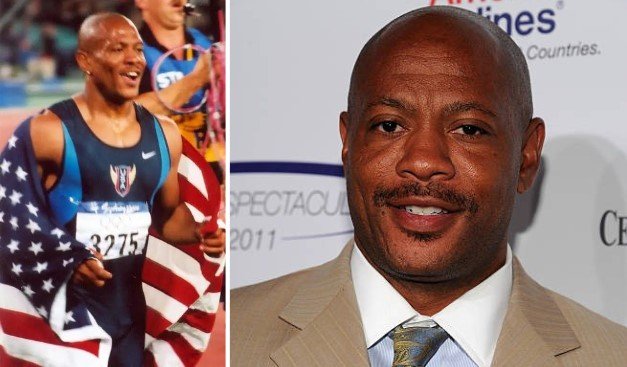
Maurice Greene is one of the most iconic names in the world of track and field, known for his blistering speed and remarkable achievements that defined an era of American sprinting. As a multiple-time Olympic champion and world record holder, Greene’s story reflects both determination and dominance in athletics.
Quick Bio
| Category | Details |
|---|---|
| Full Name | Maurice Greene |
| Date of Birth | July 23, 1974 |
| Place of Birth | Kansas City, Kansas, United States |
| Nationality | American |
| Height | 5 ft 9 in (175 cm) |
| Weight | 176 lbs (80 kg) |
| Sport | Track and Field (Sprinting) |
| Events | 100 meters, 200 meters, 4×100 meters relay |
| Major Achievements | Olympic Gold Medalist, Former World Record Holder |
| Retired | 2008 |
| Coached By | John Smith |
| Club/Team | HSI (Hudson Smith International) |
Early Life and Background

Born in Kansas City, Kansas, Maurice Greene grew up in a community that valued hard work, competition, and perseverance. From a young age, he showed signs of athletic excellence, often outrunning older kids at school events. His natural speed and explosive strength made him a standout athlete even before he took sprinting seriously.
While attending high school, Greene discovered his true calling when he began participating in local track meets. He was determined to turn his passion for sprinting into a professional career, something that very few from his neighborhood had ever done. After high school, he attended Park College (now Park University), where he began refining his running technique and discipline under the watchful eye of experienced coaches.
Introduction to Track and Field Career

Maurice Greene’s journey into professional track and field began when he joined the HSI training group, coached by the legendary John Smith. Under Smith’s mentorship, Greene learned the importance of mental strength and technical precision. Every stride, every movement out of the starting block was analyzed to achieve maximum efficiency.
Greene’s focus and determination soon paid off. By the mid-1990s, he had emerged as a serious contender in national sprint competitions. His aggressive starts and finishing power became his trademarks, propelling him to international recognition.
Rise to Fame in the Late 1990s
The late 1990s marked the peak of Maurice Greene’s dominance. In 1997, he gained global attention by competing fiercely against some of the fastest men in the world. But it was in 1999 when he made history. At a meet in Athens, Greece, Greene shattered the 100-meter world record with an astonishing time of 9.79 seconds, making him officially the fastest man alive.
This achievement not only solidified his legacy but also restored American pride in sprinting at a time when other nations were starting to dominate the sport. Greene’s charisma, confidence, and consistent performance made him the face of track and field heading into the new millennium.
World Championships Glory
In the 1999 World Championships in Seville, Maurice Greene delivered a performance for the ages. He won gold in both the 100 meters and 200 meters events, showcasing his versatility and endurance. To complete the triple crown, Greene anchored the United States to victory in the 4×100 meters relay, earning his third gold medal of the tournament.
His dominance in Seville proved that he wasn’t just fast — he was technically brilliant, strategically intelligent, and mentally unstoppable. This feat placed him alongside sprinting legends such as Carl Lewis and Michael Johnson.
Olympic Success and Peak Years
Maurice Greene reached the pinnacle of his career during the 2000 Sydney Olympics. There, he won the gold medal in the 100 meters with a time of 9.87 seconds and added another gold as part of the 4×100 meters relay team. His reaction after crossing the finish line — a mix of joy and relief — became one of the most memorable Olympic moments of the decade.
These victories solidified his place as one of the greatest American sprinters of all time. Greene’s ability to stay composed under pressure, combined with his unmatched consistency, made him nearly unbeatable during his prime years.
Training and Technique
One of the key elements behind Maurice Greene’s success was his meticulous training regime. Under John Smith’s coaching, Greene focused on strength, speed endurance, and explosive acceleration. His workouts often included short sprints, powerlifting, and plyometric exercises that enhanced his reaction time and muscle coordination.
His start technique became legendary — a lightning-fast reaction from the blocks followed by seamless acceleration. This allowed him to gain an early lead in races, often forcing competitors to chase him in vain. Greene’s technical precision and focus on biomechanics influenced many sprinters who came after him.
Rivalries and Competitive Spirit
Throughout his career, Maurice Greene faced intense competition from world-class sprinters like Ato Boldon, Donovan Bailey, and Tim Montgomery. These rivalries fueled his desire to remain the best. Greene thrived on competition, often stating that pressure brought out his best performances.
His friendly yet fierce rivalry with fellow American sprinters also elevated the level of U.S. sprinting globally, inspiring younger athletes to pursue excellence.
Injuries and Challenges
Like many elite athletes, Maurice Greene faced challenges that tested his resilience. In the early 2000s, he struggled with recurring hamstring injuries that hindered his performance. Despite these setbacks, his determination to stay at the top never wavered.
Even when he couldn’t consistently match his earlier times, Greene remained a respected figure in the sport. His comeback attempts demonstrated his dedication, proving that his love for running went beyond medals and records.
Later Career and Retirement
By the mid-2000s, Greene’s dominance began to fade as newer sprinters emerged. However, he continued to compete in international meets and relays, contributing his experience and leadership to the U.S. team.
In 2008, Maurice Greene officially announced his retirement from professional athletics. While his competitive career ended, his legacy continued to inspire sprinters worldwide. He transitioned into roles as a coach, mentor, and television personality, helping nurture the next generation of track stars.
Life After Track and Field
After retiring, Greene became an ambassador for the sport. He appeared on television programs, worked with young athletes, and promoted track and field across the globe. His transition from athlete to mentor reflected his passion for sharing his knowledge and experiences.
He also participated in various reality TV shows, including “Dancing with the Stars,” where he showcased his personality beyond the track.
Legacy and Impact on Athletics
Maurice Greene’s contribution to American athletics goes beyond medals and records. He revived global interest in sprinting during the late 1990s and early 2000s, setting new standards for professionalism, training, and performance.
His world record of 9.79 seconds stood as a benchmark for future generations, pushing the boundaries of what was thought possible. Greene’s confidence and showmanship also helped popularize track and field, attracting new fans to the sport.
Inspirations and Personal Philosophy
Greene often emphasized that success in sprinting comes from more than physical talent — it requires mental toughness, discipline, and self-belief. His motto, “Never let anyone tell you that you can’t do something,” became a mantra for aspiring athletes.
He inspired countless runners to chase their dreams, proving that determination and hard work can turn potential into greatness.
Awards and Recognition
During his illustrious career, Maurice Greene won numerous honors, including multiple Olympic gold medals, World Championship titles, and IAAF Athlete of the Year awards. He was also inducted into various halls of fame, recognizing his enduring influence on the sport.
Conclusion
Maurice Greene’s career stands as a testament to human speed, resilience, and determination. From humble beginnings in Kansas City to global fame as the fastest man in the world, he redefined what it means to be a champion. His legacy continues to inspire athletes and fans alike, reminding everyone that true greatness comes from the relentless pursuit of excellence.
FAQs
Who is Maurice Greene?
Maurice Greene is a retired American sprinter, former world record holder, and Olympic gold medalist in the 100 meters.
What was Maurice Greene’s fastest time?
His fastest recorded time in the 100 meters was 9.79 seconds, set in 1999.
How many Olympic gold medals does Maurice Greene have?
Maurice Greene won two Olympic gold medals at the 2000 Sydney Olympics.
Who coached Maurice Greene?
He was coached by John Smith as part of the HSI training group.
When did Maurice Greene retire?
He retired from professional track and field in 2008.
Visit for more information:- existingformore