

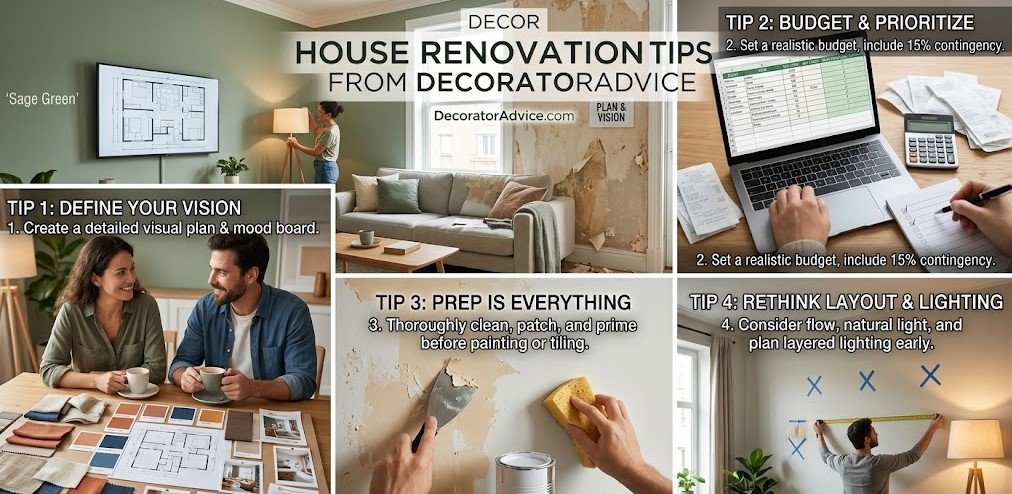
Before starting any home renovation project, it is essential to establish a clear vision and set practical goals. Without a defined direction, homeowners often end up making random design choices that do not work well together, leading to wasted money and unsatisfying results. A strong renovation vision helps you understand what you truly want from your space, whether it is more comfort, better storage, improved lighting, or a complete style transformation. This step is the foundation of the decoradhouse renovation tips from decoratoradvice, as it ensures every decision supports a unified purpose.
Once your vision is clear, the next step is to break it down into specific goals for each room. For example, your living room might focus on relaxation and entertainment, while your kitchen may prioritize efficiency and functionality. Creating a mood board or collecting design inspirations can help visualize your ideas more clearly and prevent confusion during execution. This process also makes it easier to communicate your expectations with contractors or designers.
A well-planned vision not only improves design outcomes but also saves time and money by reducing unnecessary changes during renovation. When every choice is guided by a clear goal, the entire process becomes more organized, efficient, and satisfying from start to finish.
Budget Planning for a Stress-Free Renovation
Budget planning is one of the most important steps in any home renovation, yet it is often overlooked or rushed. Without a clear financial structure, costs can quickly spiral out of control, turning an exciting project into a stressful experience. A well-planned budget helps you understand exactly how much you can spend, where to allocate funds, and how to avoid unnecessary expenses. In the decoradhouse renovation tips from decoratoradvice, budgeting is treated as the backbone of a successful renovation because it directly impacts every decision that follows.
A practical budget should include all major categories such as materials, labor, design elements, furniture, and hidden costs like permits or repairs. It is also wise to keep a buffer of at least 10–15% for unexpected issues that often arise during construction or remodeling. This extra cushion ensures that your project does not come to a halt if something unplanned occurs.
Proper budgeting also helps prioritize essential upgrades over decorative changes. Structural improvements like plumbing, electrical work, or flooring should always come first, while aesthetic enhancements can be adjusted based on remaining funds. This approach keeps your renovation balanced, realistic, and financially safe from start to finish.
Improving Home Functionality Before Aesthetics
A successful home renovation is not just about how a space looks, but how effectively it works in everyday life. Many homeowners make the mistake of focusing heavily on paint colors, furniture styles, or décor items while ignoring the practical flow of the home. However, true comfort comes from functionality—how easily you can move through spaces, access storage, and perform daily tasks without inconvenience. In the decoradhouse renovation tips from decoratoradvice, functionality is always prioritized before aesthetics because it ensures long-term satisfaction.
Improving functionality starts with analyzing how each room is currently being used and identifying problem areas. For example, a kitchen may look modern but feel inefficient if the cooking, cleaning, and storage zones are not properly arranged. Similarly, a living room might feel cramped if furniture placement restricts movement or blocks natural light. These small issues can significantly affect comfort and usability over time.
Once these challenges are identified, the next step is to make practical improvements such as optimizing layouts, increasing storage solutions, and enhancing lighting. Even minor changes like repositioning furniture or adding multi-purpose storage units can dramatically improve how a space functions. By focusing on practicality first, homeowners create a strong foundation that makes all future design upgrades more meaningful and effective.
Choosing Modern and Timeless Interior Styles
Selecting the right interior style is one of the most exciting parts of any renovation, but it also requires careful thought. Trends in home design change quickly, and what looks stylish today may feel outdated in just a few years. That is why the decoradhouse renovation tips from decoratoradvice approach encourages homeowners to focus on timeless design elements while still allowing room for modern touches. The goal is to create a space that feels fresh, elegant, and long-lasting rather than overly trend-dependent.
A balanced interior style often starts with neutral base colors such as white, beige, grey, or soft earth tones. These shades create a calm and flexible foundation that can easily adapt to different décor updates over time. Once the base is set, modern accents like bold cushions, statement lighting, or textured décor pieces can be added to bring personality into the space without overwhelming it.
It is also important to maintain consistency across rooms so the entire home feels connected. Mixing too many conflicting styles can make a house feel disorganized, while a unified design theme creates harmony and flow. By combining simplicity with selective modern elements, homeowners can achieve a stylish yet timeless interior that remains appealing for years to come.
Smart Material Selection for Long-Term Value
Choosing the right materials is one of the most important decisions in any renovation because it directly affects durability, maintenance, and overall cost in the long run. Many homeowners focus only on appearance, but materials that look good initially may not always perform well over time. The decoradhouse renovation tips from decoratoradvice emphasize selecting materials that balance beauty with strength, ensuring that your home remains both stylish and practical for years.
When selecting materials, it is important to consider factors like climate, usage, and maintenance requirements. For example, high-traffic areas such as hallways and living rooms need durable flooring options that can withstand daily wear and tear, while kitchens and bathrooms require moisture-resistant surfaces. Making informed choices at this stage helps avoid frequent repairs and replacements in the future.
A smart approach is to invest in high-quality materials for essential areas while using cost-effective options for decorative elements. This ensures long-term savings without compromising on design appeal. By focusing on durability, practicality, and long-term performance, homeowners can create a renovation that remains strong, functional, and visually appealing over time.
Room-by-Room Renovation Strategy
A room-by-room renovation strategy is one of the most efficient ways to manage a home makeover without feeling overwhelmed. Instead of trying to renovate the entire house at once, breaking the project into smaller sections allows for better control, clearer decision-making, and more accurate budgeting. The decoradhouse renovation tips from decoratoradvice strongly support this approach because it reduces stress and improves overall results by focusing attention on one space at a time.
Starting with priority rooms such as the kitchen or bathroom is often recommended because these areas have the biggest impact on daily living. Once the most important spaces are completed, attention can move to living rooms, bedrooms, and finally smaller areas like hallways or storage spaces. This step-by-step process ensures that essential improvements are completed first, while decorative upgrades are handled later with remaining resources.
Another advantage of this strategy is flexibility. If unexpected issues arise in one room, the rest of the home remains unaffected, allowing work to continue smoothly. It also helps maintain cleanliness and organization during renovation, as only one area is under construction at a time. Overall, a structured room-by-room plan makes the entire renovation process more manageable, efficient, and less disruptive to daily life.
Sustainable and Energy-Efficient Upgrades
Modern home renovation is not only about improving appearance but also about making homes more efficient and environmentally responsible. Sustainable upgrades help reduce energy consumption, lower utility bills, and create a healthier living environment. The decoradhouse renovation tips from decoratoradvice encourage homeowners to think long-term by incorporating eco-friendly solutions that benefit both the household and the environment.
Energy-efficient improvements can include installing LED lighting, using energy-saving appliances, and improving insulation to maintain indoor temperature more effectively. These changes may seem small individually, but together they significantly reduce overall energy usage. In addition, sustainable materials like bamboo flooring, recycled wood, and low-VOC paints help minimize environmental impact while maintaining a modern aesthetic.
Another important aspect of sustainability is reducing waste during renovation. Reusing existing furniture, refurbishing old items, and carefully planning material usage can greatly reduce unnecessary disposal. This not only saves money but also contributes to a more responsible and eco-conscious lifestyle. By focusing on sustainability, homeowners create a space that is not only beautiful but also efficient and future-ready.
Final Touches That Elevate Your Home Design
The final stage of any renovation is where a house truly starts to feel like a home. After all the structural work, planning, and design execution, the finishing touches bring personality, warmth, and completeness to the space. In the decoradhouse renovation tips from decoratoradvice, these final details are considered essential because they transform a well-renovated house into a comfortable and visually appealing living environment.
Final touches include elements like lighting accents, wall décor, artwork, cushions, rugs, and indoor plants. These items may seem small, but they play a major role in defining the overall mood of a space. Proper lighting, for example, can make a room feel larger and more welcoming, while carefully chosen décor pieces can reflect personal style and enhance aesthetic harmony.
It is also important not to overcrowd the space during this stage. A clean, balanced design often looks more elegant than a heavily decorated one. The goal is to highlight the beauty of the renovation without overwhelming the senses. When done correctly, these finishing details complete the transformation and give the home a polished, well-designed look that feels both functional and inviting.
Conclusion
A well-planned renovation is not just about changing how a home looks—it is about improving how it works, feels, and supports daily life. The decoradhouse renovation tips from decoratoradvice highlight a structured approach where planning, budgeting, functionality, and design all work together to create a balanced outcome. When each step is handled carefully, homeowners can avoid unnecessary stress, control costs, and achieve a result that feels both practical and visually appealing.
From setting a clear vision to choosing the right materials and finishing with thoughtful décor, every stage of renovation plays an important role. The key takeaway is simple: smart planning always leads to better results than rushed decisions. A home that is designed with intention will not only look good but also serve your lifestyle for years to come.
Ultimately, successful renovation is about balance—balancing beauty with function, creativity with structure, and style with long-term value. By following these principles, any home can be transformed into a comfortable, modern, and efficient living space.
FAQs
1. What is the main idea behind decoradhouse renovation tips from decoratoradvice?
It focuses on smart planning, budgeting, and functional design to create stylish and practical home renovations.
2. Why is budgeting important in home renovation?
Budgeting helps control costs, avoid overspending, and ensures essential repairs are completed first.
3. Should functionality be prioritized over design?
Yes, functionality should always come first because it ensures comfort and usability in daily life.
4. How can I make my renovation more cost-effective?
Reuse existing materials, plan room-by-room, and focus on essential upgrades before decorative changes.
Visit for more information:- existingformore
 David
David